Rijswijk Library
User research for a young adult's language needs in a library
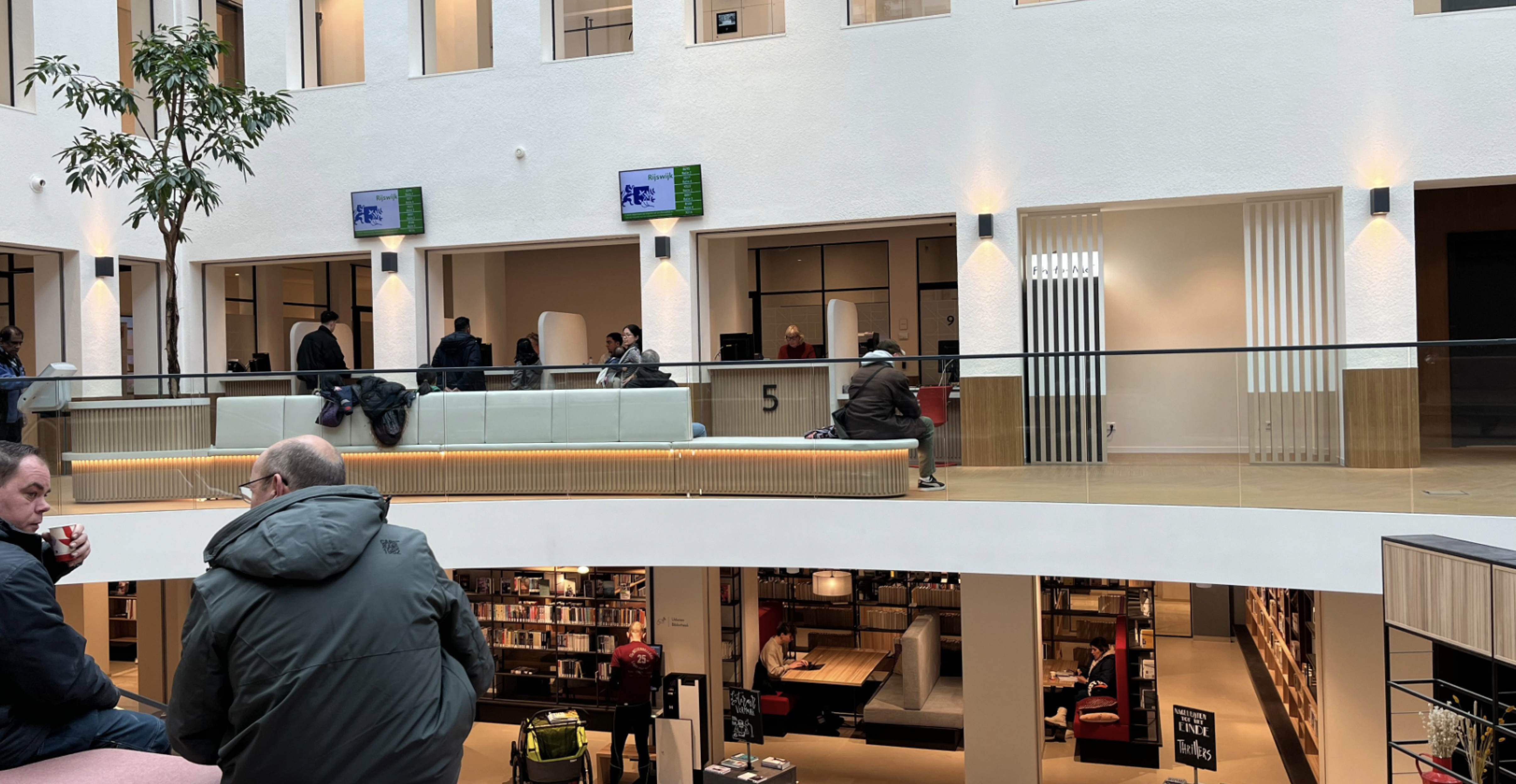
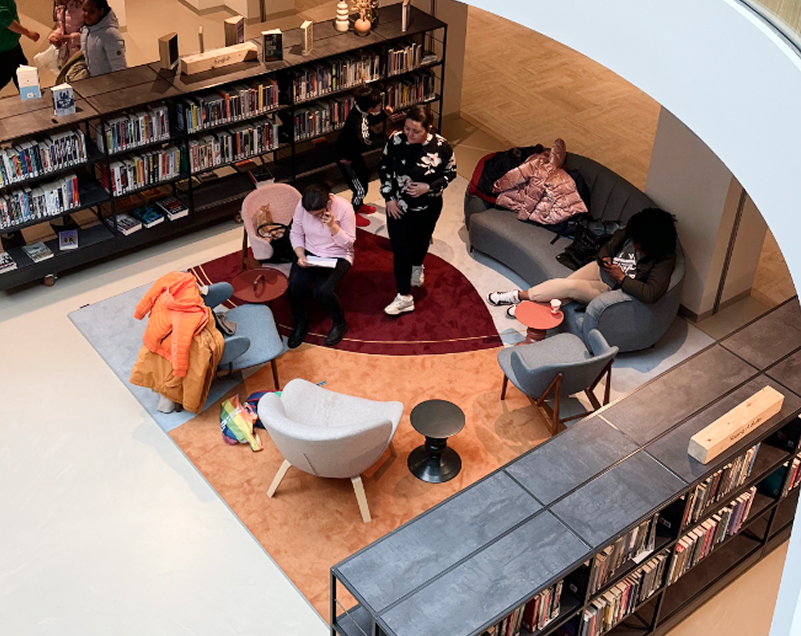
The Rijswijk Library noticed that young adults visit less frequently and, when they do, tend to interact very little with one another. They asked us to create a physical installation to encourage interaction and create a more lively, social atmosphere among young adults. The theme revolves around language.
Research Questions
What are the main language exploration and expression needs of young adults?
How do young adults currently conceive language and interact with it?
What specific elements draw visitors' attention within the library setting?
How do visitors' experience and interactions in the library contribute to overall satisfaction and feeling of belonging?
Research Methods
Preparatory and secondary desk research
To begin the research, we conducted desk research that supports the preparations of future research methods. This included a thorough review of the Rijswijk Library's existing approach to the problem, along with the client debriefing session.
What students do when they study in the library
Using ethnographic methods to observe student behavior
Suarez, 2007
Seeing through the eyes of students
Participant observation in an academic library
Bedwell & Banks, 2013
Types of Languages
Understanding verbal and non-verbal communication
Wrench et al., 2017
Observation and Interviews
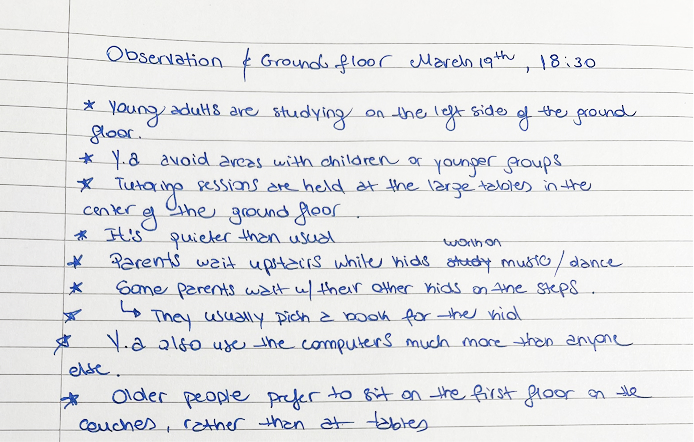
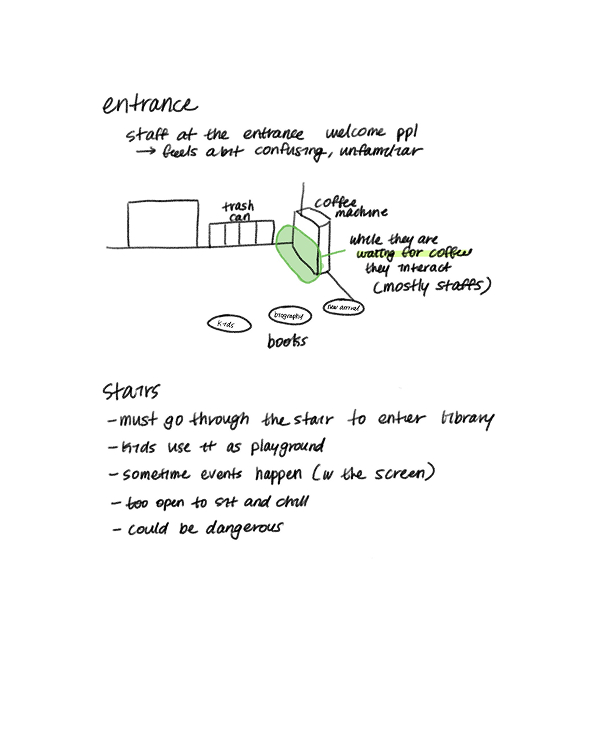
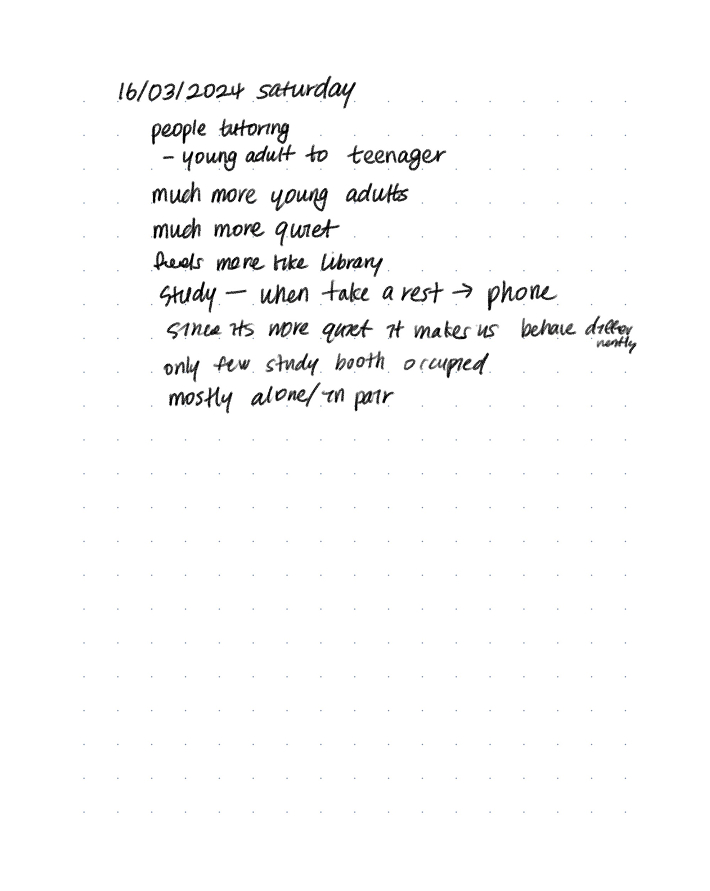
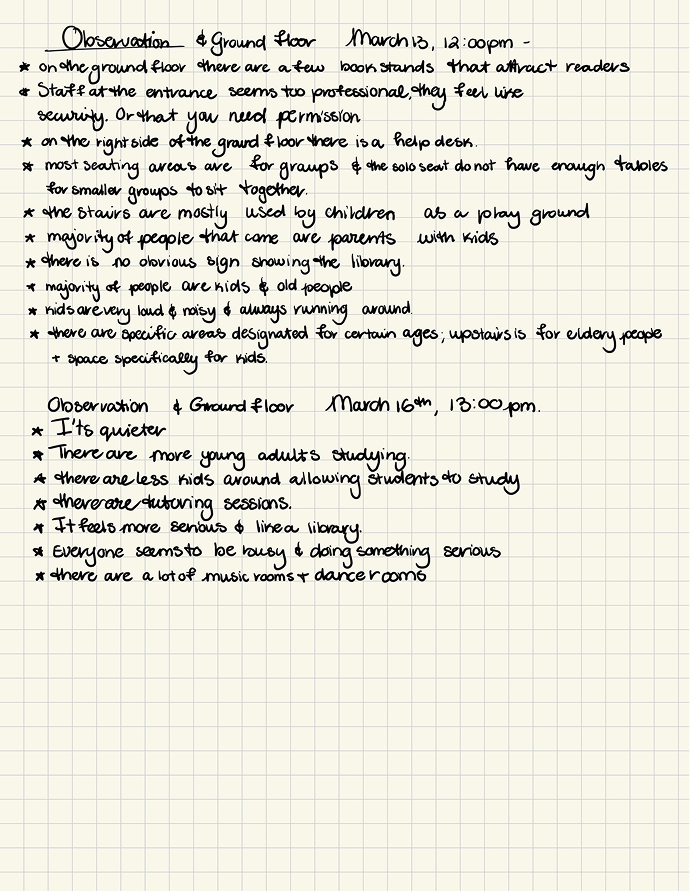
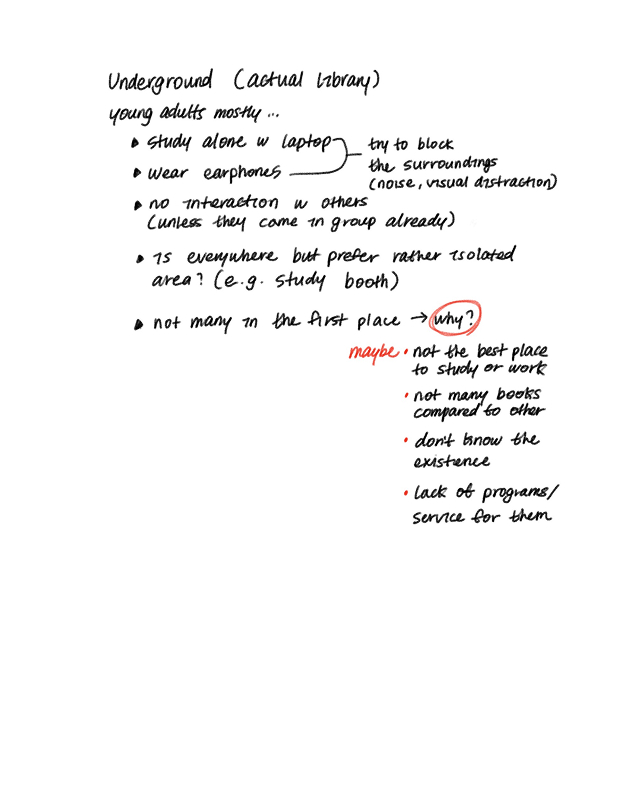
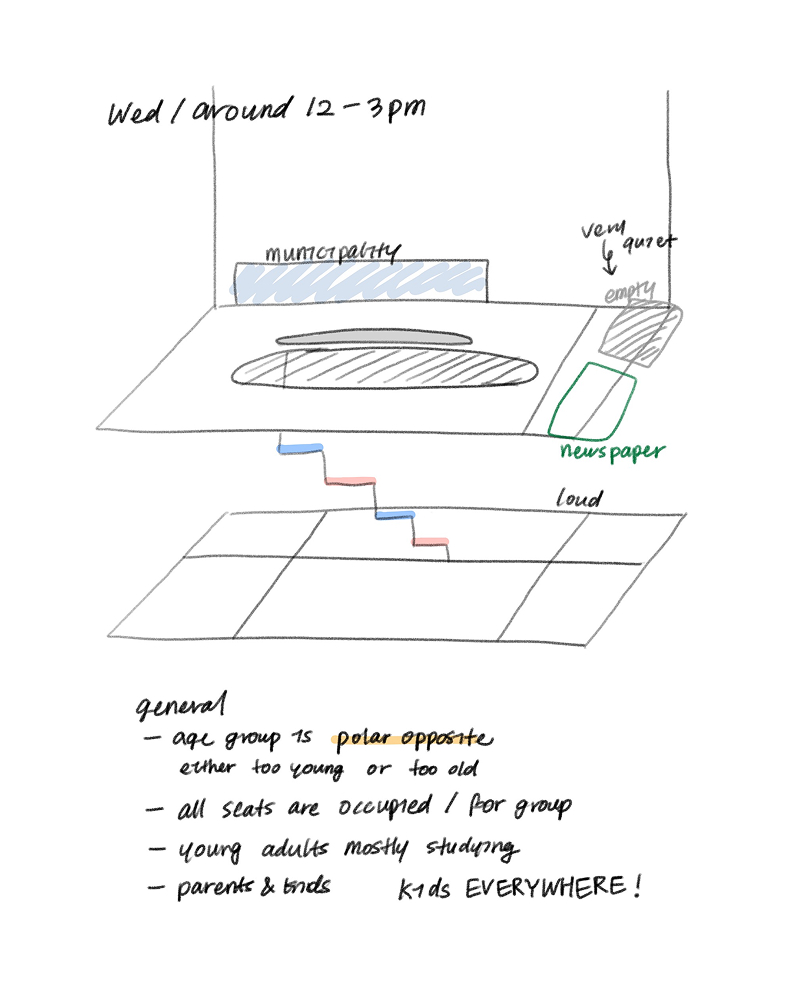
Using the fly-on-the-wall observation method, we observed the behavior of library visitors, focusing on the relation between the space and repetitive behavior patterns. We then interviewed library staff for their insights and approached young adults for short semi-structured interviews.
Questions for library staff
- What do you like about this library?
- Do you interact a lot with the visitors?
- How would you categorize them in groups?
- What kind of common behaviors do you notice about young adults?
- What would attract more young people to this library?
Questions for young adult visitors
- What are your main purposes to come to the library?
- How often do you come?
- Do you ever interact with other visitors/staff?
- Where is your favorite spot in this library?
- Do you feel welcomed to this library?
- How do you feel about interactive and entertaining activities in the library?
Survey
The survey questions focused on understanding current communication culture and behavior of young adults. We gathered 28 responses between the age of 18 to 25.
Which means of communication do you use the most?
Which means of communication do you prefer?
What do you enjoy the most to talk about?
What do you avoid to talk about?
Selected responses from the survey that stood out
“I think they can all be really interesting, fun, important, and a chance to learn from each other.”
“It's very simple to start a conversation. I don't like to talk about deep topics, I prefer to talk about light topics.”
“They can cause issues with differences and sometimes the topics are boring.”
“Because we could have different opinions and I don't want to feel uncomfortable or have a fight because of that.”
Non-verbal Communication
What kind of non-verbal means of communication do young adults use a lot when talking to their friends?
Focus Group
We recruited four students from THUAS to participate in a focus group. The primary goal was to create a comfortable environment where participants could freely talk and discuss about the topic.
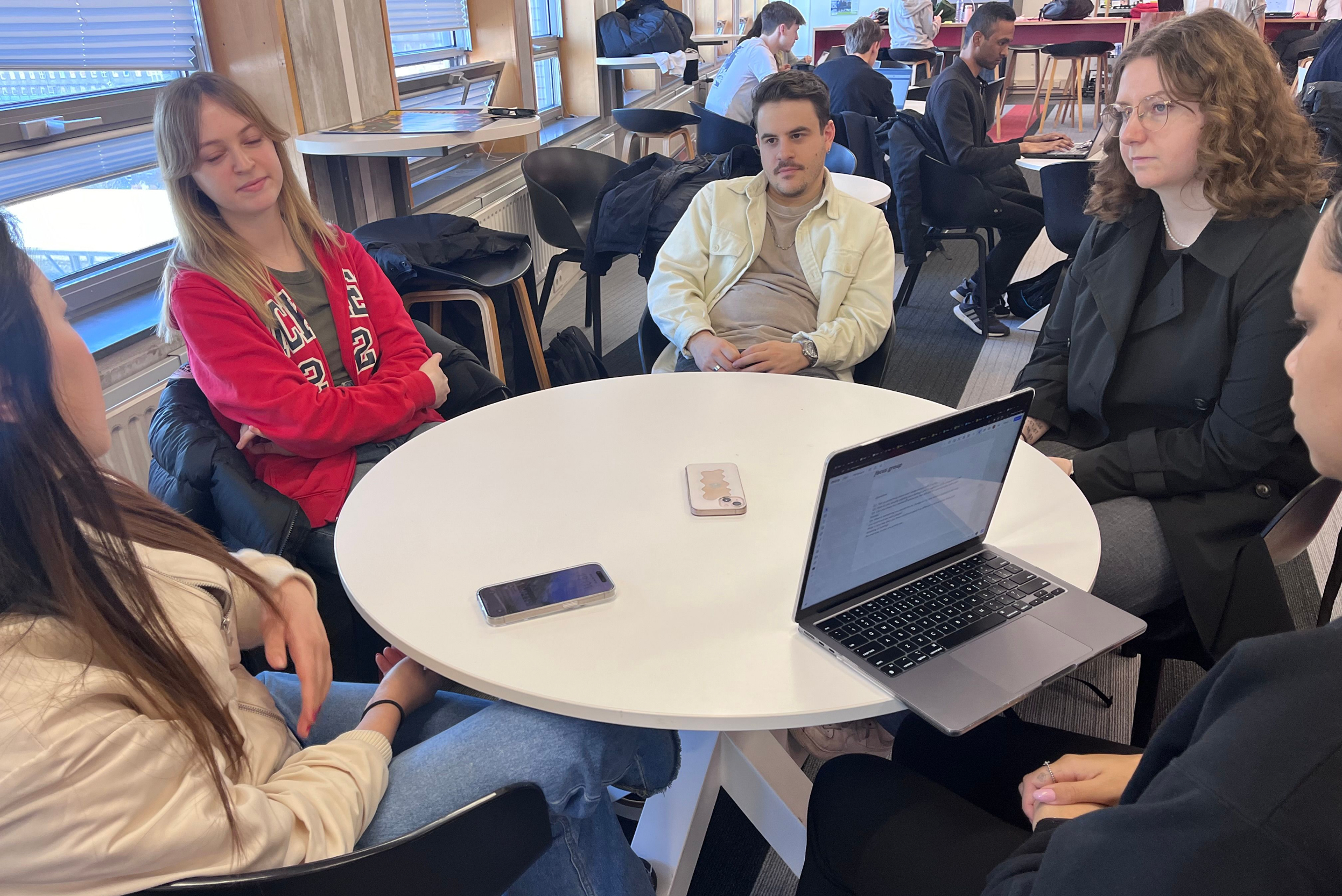
Discussion Questions
- Q1.Tell us something about your relationships with friends.
- Q2.How do you usually express your feelings and thoughts?
- Q3.Can you share moments where you felt difficult to communicate?
- Q4.What would you like to change about the way you communicate?
- Q5.Have you communicated in a different method other than speaking or texting?
Data Processing and Analysis
We compiled nearly 200 data cards and organized them using Affinity Diagram methods, which helped us identify key insights. While organizing the findings, we incorporated inferences to enhance the depth of insights and ensure they are as practical as possible for the design phase.
Desk Research
Observation
Interview
Survey
Focus Group
Key Insights & Inferences
From the data analysis, we identified 10 key insights about young adults' communication behavior and library experience. Click each card to reveal the inference.
User Personas
Based on the final insights, we developed user personas that highlight users' needs in relation to our research questions.
Mia
Persona 1
Mia is reflective and appreciates profound and meaningful communication. She often finds comfort and motivation in the library. She believes writing is a great tool for self-analysis and self-expression.
Communication
Prefers live communication, uses hand gestures and eye movements. In the library, prefers quiet and focus.
Challenges
Finds it difficult to relate to others' emotional state and to express thoughts openly.
Goals
Wants to develop communication ability and increase self-awareness and awareness of others.
Alex
Persona 2
Alex is outgoing and tech-friendly, keeping in touch through social networking and digital media. He appreciates innovation and creativity and is attracted to interactive experiences.
Communication
Prefers digital channels like texting and social media. Visits library to study with friends and enjoys discussing topics.
Challenges
Finds it hard to create deep connections online. Feels a lack of genuine communications.
Goals
Wants more in-depth conversations and seeks new communication methods to talk about feelings and thoughts.